Most of us don’t think about breathing very often. We simply do it.
And when we think about going to the dentist, breathing probably isn’t the first thing that comes to mind either.
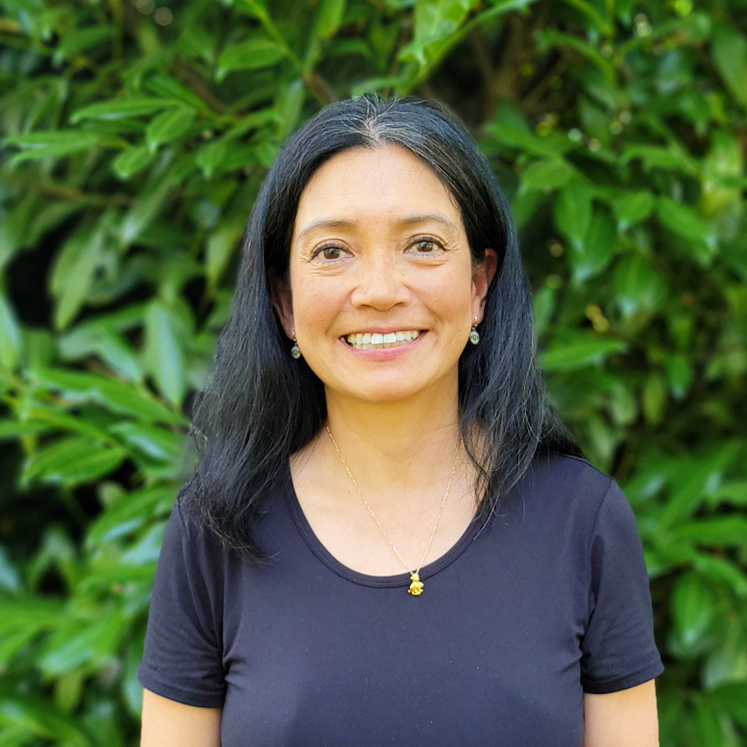
For Dr. Ivy Yu at MySmile Health Centre in Burnaby, however, the connection between oral health, facial development, sleep, jaw function and the airway has become an increasingly important area of interest.
It is part of a broader way of looking at dentistry: not simply asking “How are the teeth?” but also considering what may be happening around them and “Why did the teeth and jaws end up the way that they did“?
That curiosity recently took Dr. Yu all the way to Italy.
Exploring Airway Focused Dentistry in Italy
Dr. Yu recently attended an introductory AMCOP Elastodontics Master Course at the Cardarelli Academy Clinic in Isernia, Italy.
The theoretical and practical program, led by Dr. Filippo Cardarelli, introduced concepts involving Bio-orthodontics and Elastodontic therapy, including the use of AMCOP appliances and approaches related to malocclusion, sleep-disordered breathing and temporomandibular disorders (TMD).
For Dr. Yu, the purpose wasn’t simply to learn about another dental appliance.
It was to better understand a much bigger question:
How can the development and function of the mouth and jaws affect the way we breathe and sleep—and how can dentistry potentially play a role?
Why the Airway Matters
An open, healthy airway allows us to breathe comfortably through the nose. But when airflow is restricted, particularly during sleep, the body will most likely do what it can to compensate and bring the body back to homeostasis without us needing to think about it.
A person may breathe through their mouth. Sleep may become disrupted. The jaw or tongue may adopt different positions to help maintain airflow.
And sometimes the signs appear in places people wouldn’t immediately associate with breathing.
In adults, possible signs of an airway or sleep-related breathing problem can include snoring, mouth breathing, waking with a dry mouth, restless or unrefreshing sleep, daytime tiredness, morning headaches, jaw discomfort, jaw clenching and grinding and difficulty concentrating.
These symptoms can have many possible causes, which is why proper assessment matters.
Children Can Show Different Signs
Airway concerns can be particularly interesting in children because they are still growing and the jaws are developing.
A child who regularly struggles to breathe comfortably through the nose may compensate by breathing through the mouth. Long-term mouth breathing can be associated with changes in oral posture and negative patterns of facial, jaw and dental development.
Parents may notice mouth breathing, snoring, restless sleep, frequent waking, teeth grinding, unusual sleeping positions or difficulty waking in the morning.
During the day, some children may appear tired, irritable, have difficulty concentrating or hyperactive.
That doesn’t mean every child who snores or struggles to concentrate has an airway problem. It does mean these signs can be worth discussing rather than automatically dismissing them as “just the way they sleep or that is how they are.”
Looking Beyond the Teeth
This is where Dr. Yu’s interest in Airway Focused Dentistry fits naturally with her philosophy at MySmile Health Centre.
She is a general dentist who provides the family dental care patients expect: examinations, hygiene, fillings, restorative care and ongoing prevention.
But she also believes modern dentistry gives us an opportunity to look beyond individual teeth.
How is the patient breathing?
How are the jaws developing?
What is the resting position of the tongue?
Is there evidence of mouth breathing?
Are there signs of clenching or grinding?
Could sleep, airway, jaw function and oral health be connected?
These questions don’t replace traditional dentistry. They add another layer to it.
An Exciting Direction for Dr. Ivy Yu

Dr. Yu is excited about continuing to explore this area of dentistry.
Her recent training in Italy is part of that journey—learning new concepts, understanding different approaches and carefully considering how they may be applied when appropriate for patients at MySmile Health Centre.
Airway concerns can also involve areas outside the scope of dentistry. Depending on the individual patient, collaboration or referral to a physician, ENT, sleep physician or other healthcare provider may be appropriate.
The goal isn’t to assume that every symptom has a dental solution.
It is to notice more, ask better questions and help patients investigate problems that might otherwise be overlooked.
And for Dr. Yu, that is what makes this direction so interesting.
Could Your Breathing Be Telling You Something?
Consider talking with Dr. Ivy Yu if you or your child regularly experiences:
- Mouth breathing
- Snoring
- Restless or disrupted sleep
- Waking with a dry mouth
- Teeth grinding or clenching
- Jaw discomfort
- Morning headaches
- Daytime tiredness despite apparently sleeping enough
- Difficulty concentrating
- Concerns about your child’s jaw or dental development
These symptoms do not automatically mean there is an airway disorder, and dentistry isn’t the answer to every breathing or sleep problem.
But they may be worth exploring.
If you have noticed these signs in yourself or your child, contact Dr. Ivy Yu and the team at MySmile Health Centre in Burnaby.
Sometimes taking a closer look at the mouth can start a much bigger conversation about breathing, sleeping—and overall health.